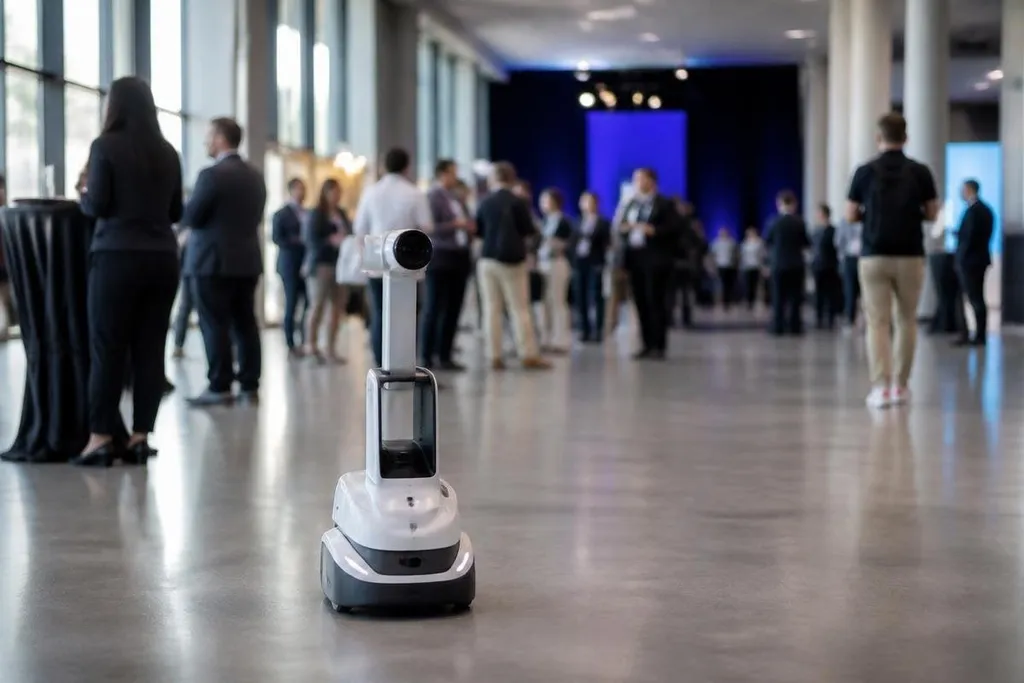
A robot at an event can move through a venue, hold a camera at a fixed height, and repeat the same route for each session. That could help photo teams cover large spaces, but the useful work depends on how well the system handles people, light, and changing plans.
- A mobile base can reach rooms that need repeated coverage.
- Teleoperation gives a human control when the route or shot changes.
- Privacy, safety, and image review need clear rules before paid use.
Where a robot could help
Event photography has many repeatable tasks. It could move between a stage, a sponsor wall, and a registration area, then return to those places during set periods. Its camera could record the route, stop at marked points, and send images to a nearby computer.
That setup suits events with large floors and fixed schedules. Trade shows, graduations, and sports venues may need the same areas photographed many times, often while a small team handles guests and urgent requests elsewhere.
The robot would need more than wheels and a camera mount. LiDAR, which measures distance with laser pulses, could help it map walls, furniture, and people. A gimbal could keep the camera level as the base moves across the floor.
The human still sets the shot
It can repeat a route. It can't know that a speaker has paused for a useful reaction, that two guests have an awkward gap between them, or that a family member has stepped into the frame at the wrong moment unless a person guides it.
Teleoperation covers that gap. A photographer can watch a video feed, steer the robot, and change the camera angle from a control station. The setup keeps the photographer involved, but it also adds a person who must watch the feed during the event.
That cost matters. If the robot needs constant control in crowded rooms, the team may gain reach but lose the staff time it hoped to save. I'd use a robot first for repeatable coverage, not for the main documentary work of a wedding or live performance.
What can go wrong in a venue
Events are poor places for a system that expects clean floors and empty paths.
Power cables, chairs, bags, low lighting, reflective walls, and sudden crowds can change the route after the map is made.
A safe system needs a physical stop button, a low travel speed near guests, and a way to stop when its sensors disagree. The camera also needs a clear height and movement rule, since a lens passing close to a seated guest can feel intrusive even without contact.
Image work adds another concern. Guests may not know when the robot is recording, where the files go, or how long the images stay available. Event organizers should set notice, consent, storage, and deletion rules before the first session begins.
Privacy rules are one part of the job. Robot24.com's reporting on camera robots can place the machine’s task, control method, and limits beside the event workflow. That leads to the next test: whether the robot improves the shoot without adding work for the crew.
The photo workflow matters more than the robot
A moving camera creates little value if the team must sort poor images by hand. The system needs a reliable way to mark time, location, and event session so a photographer can find the right files later.
The handoff also needs checking. A team should review focus, exposure, motion blur, and faces before images reach a client. The system can keep working through a scheduled route, but it can't remove the need for image judgment.
The strongest setup may pair a robot with a human photographer. The robot covers fixed positions and long routes, and the photographer handles portraits, fast action, lighting changes, and moments that need social judgment.
A practical decision guide
Use these checks before putting a camera robot in a paid event:
- Map the route: mark doors, ramps, cables, and places where guests gather.
- Set camera rules: choose height, movement speed, framing, and recording periods.
- Plan human control: name the person who can steer or stop the system.
- Test the handoff: move files into the team’s normal review and delivery process.
- Tell guests: explain where recording happens and how images will be stored.
- Define failure points: pause the robot when lighting, crowds, or floor access change.
A robot makes sense when the event has repeatable routes, a trained operator, and enough space for safe movement. If the job depends on quick social choices and changing light, a human photographer remains the better tool.
The next useful test is not a staged shot. It is a full event run with guests, cables, blocked paths, image review, and a written record of every stop.